

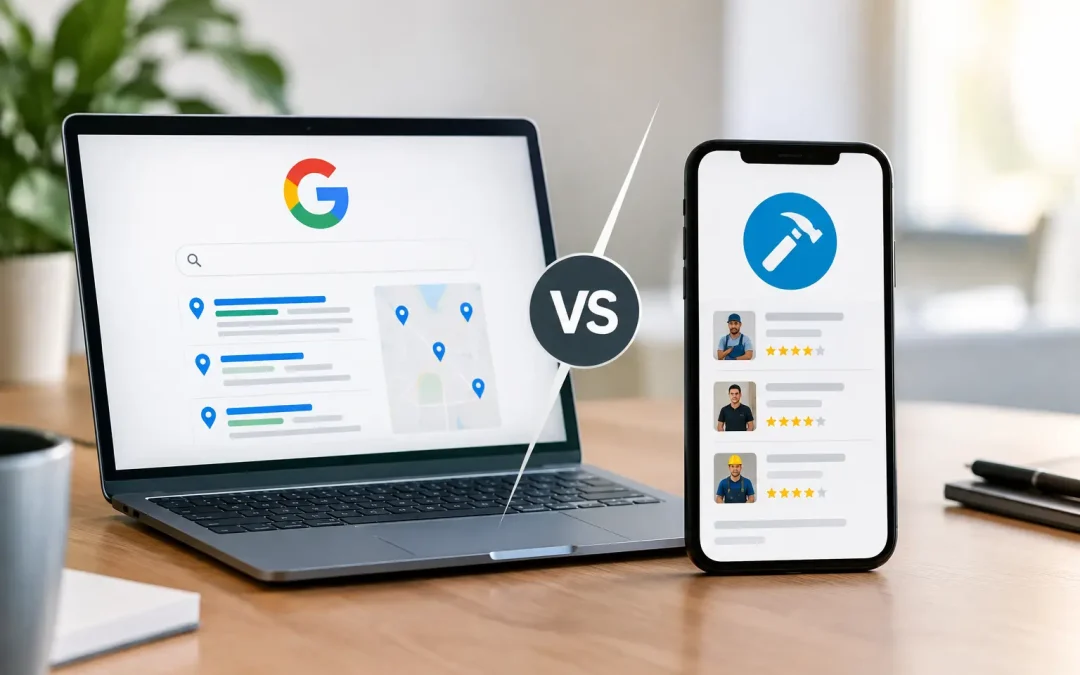
A homeowner with a burst pipe, failed AC unit, or storm-damaged roof is not browsing for entertainment. They want a qualified provider who can respond now, show up, and solve the problem. That urgency is why the Google LSAs versus Thumbtack leads decision matters so much for home service companies. Both can create opportunities, but they put your business in front of buyers at very different points in the decision process.
The wrong comparison is, “Which platform sends cheaper leads?” The better question is, “Which source produces profitable booked jobs at a volume our team can actually handle?” A $30 inquiry is expensive if nobody answers it for 20 minutes. A $90 lead can be a bargain if it becomes a $9,000 replacement job with strong margin.
Google LSAs Versus Thumbtack Leads: The Core Difference
Google Local Services Ads place eligible, screened service businesses at the top of relevant Google search results. The prospect is actively searching for a service, usually in a defined area, and can call or message directly from the ad. For many emergency and high-intent home service categories, that is close to bottom-of-funnel demand.
Thumbtack works more like a marketplace. A homeowner submits a project request, answers questions, and receives matches or allows pros to respond. The customer may be ready to hire, but they may also be collecting estimates, refining project scope, or comparing several providers before deciding whether to move forward.
Neither model is automatically better. Google LSAs tend to capture immediate demand that already exists. Thumbtack can help create opportunity for project-based work where customers need education, options, or estimates. The fit depends on your service mix, ticket size, crew capacity, service area, and ability to follow up.
Where Google LSAs Usually Win
For HVAC repair, plumbing, electrical service, pest control, water damage, locksmith work, and other urgent categories, LSAs often produce stronger buyer intent. The customer searched for the work. They did not merely indicate an interest in it. That distinction affects answer rates, appointment rates, and close rates.
LSAs also give your business more credibility at the moment of choice. The Google Guaranteed badge, review count, proximity, hours, and responsiveness can make your company the obvious call when a homeowner is under pressure. A strong Google Business Profile and consistent review strategy support that advantage because customers often check both before contacting you.
The operational challenge is that LSAs reward businesses that behave like fast, dependable operators. Missed calls, slow message replies, poor availability, and weak review velocity can limit results. If your office cannot answer during the hours you advertise, you are paying to expose a bottleneck.
Lead disputes are another consideration. Google may allow businesses to dispute certain invalid leads, such as wrong numbers, duplicate requests, or inquiries outside a qualifying service. That does not mean every unclosed lead should be disputed. Marketing accountability still requires measuring what happens after the phone rings: Was the call answered? Was it a real homeowner? Was an appointment offered? Did the technician close it?
Where Thumbtack Can Earn Its Place
Thumbtack can be useful for remodeling, landscaping, painting, tree service, flooring, handyman work, and other project-oriented categories. These buyers may not know exactly what they need, and they often value photos, detailed profiles, credentials, and a professional estimate process.
It can also help a company fill gaps in a new territory, keep crews productive during a seasonal slowdown, or test demand for a service line before investing heavily in a broader campaign. For a contractor with open production capacity, incremental jobs can be valuable even when the close rate is lower than a Google search lead.
But marketplace leads need disciplined filtering. Some prospects are price shopping. Some submit one request to multiple providers. Some have vague scopes, unrealistic budgets, or timelines that are months away. If your sales team treats every Thumbtack inquiry like a ready-to-buy LSA call, they will waste time and blame the platform.
The right response is not to dismiss Thumbtack. It is to use a defined qualification process. Ask about project timing, location, budget range, decision-makers, property type, and desired outcome early. Then route qualified opportunities into your estimate workflow and place the rest into follow-up campaigns instead of allowing them to disappear.
Cost Per Lead Is Not Cost Per Job
A lead source should be judged on revenue quality, not the number shown in a platform dashboard. The metrics that matter are contact rate, appointment rate, show rate, close rate, average ticket, gross margin, cancellation rate, and repeat or referral value.
Consider two examples. An HVAC company pays more per LSA lead but answers nearly every call within 30 seconds and books same-day diagnostics. Another company gets inexpensive marketplace requests but responds hours later with a generic message. The first company may acquire fewer inquiries while producing far more profitable revenue.
For larger projects, the math can shift. A remodeling contractor may accept a higher volume of Thumbtack leads because one well-qualified kitchen or bath project covers many unproductive conversations. Yet the contractor still needs an estimator who can qualify prospects, follow up consistently, and present a clear value-based proposal. Lead generation cannot compensate for a weak sales process.
Track every source in your CRM or call-tracking process through to booked revenue. If you only compare platform-reported leads, you are measuring activity, not growth.
The Hidden Factor: Speed to Lead
The platform does not close the job. Your response system does.
Google LSA calls are often won or lost before the second provider answers. Thumbtack requests can cool quickly as competing pros respond. In both cases, fast contact improves the odds of a real conversation, but speed must be paired with competent handling. A rushed, unprepared office team can lose just as many jobs as a slow one.
Build a clear intake workflow: calls are answered live when possible, missed calls trigger immediate text-back, web and marketplace inquiries receive a prompt personal response, and every prospect gets a next step. For urgent work, that next step may be dispatch. For estimates, it should be a defined appointment with reminders and pre-qualification.
This is where fragmented marketing breaks down. An agency can report leads, an office manager can report calls, and a sales manager can report proposals, while nobody connects the full path. A unified growth plan connects visibility, lead capture, response automation, appointment setting, and post-job review requests so every stage improves the next one.
How to Choose the Right Mix
Start with the work you want more of, not the platform you happen to know. If your priority is immediate service calls in established markets, Google LSAs usually deserve first attention. Build adequate budget, verify every category and service area, protect your responsiveness, and keep reviews moving.
If you sell project work, have available estimating capacity, or need to develop demand in a newer market, Thumbtack can be a productive secondary channel. Set a weekly lead budget, define what qualifies for an onsite estimate, and review closed revenue by job type rather than chasing every notification.
Many established businesses benefit from using both, but not with the same expectations. LSAs can supply high-intent calls while Thumbtack supports project pipeline and capacity utilization. The mistake is treating both as interchangeable lead faucets.
Before increasing spend on either channel, answer three operational questions in writing: Can we respond within minutes? Do we know which jobs are most profitable? Can we track every inquiry to an outcome? If the answer is no, fix the process first. More leads will only make the leak larger.
Near Me Website Marketing approaches paid lead channels as part of the full customer journey, not as isolated dashboards. The goal is not more form fills or phone calls for their own sake. It is a dependable system that turns local demand into booked, profitable work and gives leadership a clear view of what is driving growth.
The best channel is the one your business can convert consistently. Choose the demand source that fits your services, then build the response and follow-up discipline that makes every qualified opportunity count.