

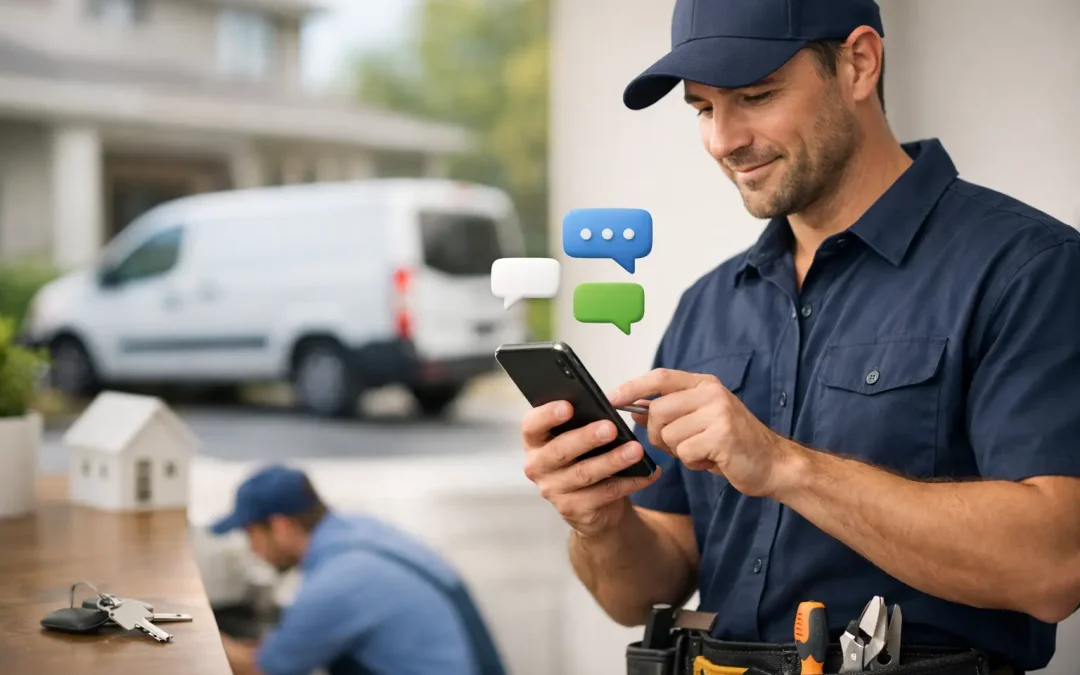
A homeowner with a leaking water heater is not comparing brand values for three days. They want a response, a time window, and confidence that someone is coming. That is where text message marketing home services companies can use becomes more than a promotional channel. Used correctly, it is part of the operating system that turns an inquiry into a booked job, a completed job into a review, and a satisfied customer into the next call.
The key word is correctly. Random coupon blasts do not build a dependable service business. A coordinated text strategy supports the moments where speed, clarity, and follow-through directly affect revenue.
Why home service businesses should take texting seriously
Text messages get seen quickly, which makes them useful when the customer needs action rather than another marketing email. For HVAC, roofing, electrical, pest control, plumbing, and remodeling businesses, the buying cycle often moves fast. A lead who fills out a form at 10:15 may be speaking with a competitor by 10:20.
Fast response matters, but the real objective is not simply sending a text. It is moving the prospect to the next committed step: a phone conversation, a scheduled estimate, a confirmed service window, or a deposit. That requires messaging connected to your intake process, dispatch workflow, CRM, and sales follow-up.
Businesses that treat texting as an isolated tool often create another leak in the funnel. The office sends a message, nobody owns the reply, and the lead goes cold. A stronger system assigns ownership, defines response expectations, and records outcomes so management can see whether messages are producing booked jobs rather than just conversations.
Where text message marketing for home services produces results
The highest-value messages are usually triggered by customer behavior or a real operational event. They arrive when the recipient expects useful information, not when the business simply wants attention.
Immediate lead response
When someone requests an estimate outside business hours, an automated acknowledgment can stop the silence that costs leads. It should set a clear expectation: their request was received, a team member will contact them, and urgent issues should be handled through the appropriate emergency number.
During business hours, automation should support the team, not replace it. A prompt text such as, “We received your request for an AC repair. Is this system currently not cooling at all?” can gather context while a coordinator prepares to call. For higher-ticket work such as roofing or remodeling, the goal may be to confirm the project type and schedule a consultation rather than force a long conversation by text.
Appointment confirmations and no-show prevention
Missed appointments drain capacity. A confirmation message sent after booking, followed by a reminder the day before or the morning of service, helps customers remember the commitment and gives them an easy way to reschedule.
The message needs enough detail to reduce uncertainty: appointment date, arrival window, business name, and a simple reply option. Avoid sending vague reminders that make the homeowner search through old messages to understand what they agreed to.
Technician-on-the-way updates
For field service companies, this is one of the most practical uses of SMS. An “on the way” message lowers customer anxiety, reduces inbound calls to the office, and makes the service experience feel organized. It can also help protect the technician’s schedule because customers are more likely to be ready when the crew arrives.
This works best when dispatch data is accurate. If the team sends automated arrival messages but routinely misses the stated window, the technology magnifies the operational problem. Fix the schedule before scaling the automation.
Estimate follow-up
Many estimates are lost not because the price was impossible, but because follow-up was inconsistent. A concise text after an estimate can reopen the conversation while the project is still top of mind. It should not pressure homeowners into a decision they are not ready to make. It should clarify the next step and make it easy to ask a question.
For example, a roofing company may follow up after an inspection with a message asking whether the homeowner would like to review material options or financing. An electrician may offer a convenient callback window after sending a panel upgrade estimate. The right follow-up depends on sales cycle length, job value, and whether the customer needs approval from another decision-maker.
Review requests and repeat service
The best time to request a review is after the work is complete and the customer has had a positive interaction with the team. A short, personal message from the company is more effective than a generic campaign sent weeks later. Make the request simple, respectful, and tied to the completed service.
Texting also supports planned maintenance and seasonal demand. HVAC tune-ups, pest control renewals, water treatment service, and gutter cleaning all create legitimate reasons to contact existing customers. These campaigns work when they are targeted by service history and timing. They fail when every person in the database receives the same offer regardless of what they bought.
Build the system before you send campaigns
A text program should begin with the customer journey, not a list of message ideas. Map the points where leads or customers commonly disappear: after form submission, after the first missed call, after an estimate, before an appointment, or after job completion.
Then define the action you want from each message. A lead-response text might seek a reply. A reminder seeks confirmation. A review request seeks feedback. A reactivation campaign seeks a booking. One message should generally have one job.
At Near Me Website Marketing, this is the difference between adding another marketing tactic and building a growth system. Texting performs best when it is coordinated with local visibility, paid lead generation, conversion-focused pages, call handling, and follow-up automation. More leads do not help if the business is still slow to respond or unable to book them.
Set rules for speed and ownership
Automation can acknowledge a request instantly, but a person must own qualified replies. Establish a response-time standard for office staff, after-hours routing, and escalation for emergency leads. If a homeowner texts back “no heat,” the system should not leave that reply sitting in a shared inbox until morning.
Track lead source, first-response time, contact rate, booked appointment rate, show rate, and closed revenue. These numbers reveal whether texting is improving the business or merely increasing activity. A campaign that generates replies but no appointments needs a different offer, better qualification, or stronger office follow-up.
Consent and compliance are not optional
Text messaging is personal. Businesses need clear permission to send marketing messages, a documented opt-in process, and an easy way for recipients to stop messages. Transactional communications such as appointment updates may be handled differently than promotional campaigns, but the distinction is not a reason to be careless.
Use clear language on web forms, maintain consent records, honor opt-outs immediately, and avoid buying contact lists. Message frequency also matters. A homeowner who signed up for a service reminder did not necessarily ask for three promotions a week.
Federal and state rules can change, and requirements vary based on how messages are sent and what they contain. Work with qualified legal counsel and your messaging provider to ensure your process fits your business. Compliance is not just a legal issue. It protects trust with the local market you are trying to lead.
Common mistakes that reduce results
The first mistake is treating every contact like a new lead. Existing maintenance customers, past estimate opportunities, and emergency callers have different needs and should receive different messages.
The second is over-automating high-consideration sales. A bathroom remodel, roof replacement, or whole-home generator purchase often requires consultative follow-up. Text can create momentum, but it does not replace a trained salesperson who can answer objections and guide the decision.
The third is measuring clicks instead of revenue. Your dashboard should show whether text-assisted leads booked, showed up, purchased, renewed, or referred others. If it cannot connect messaging activity to those outcomes, it is not giving management the information needed to make decisions.
Start with the moments that already cost you money
Do not begin with a dozen promotional campaigns. Start with the leak that is most expensive right now. If leads wait too long for a response, build immediate acknowledgment and live follow-up. If technicians lose time to no-shows, install confirmation and reminder sequences. If your team completes great work but rarely earns reviews, create a post-service request process.
Text message marketing earns its place when it makes the customer experience easier and the business more accountable. Build around real service moments, assign responsibility for every reply, and measure booked work instead of message volume. That is how a simple text becomes part of a better business.