

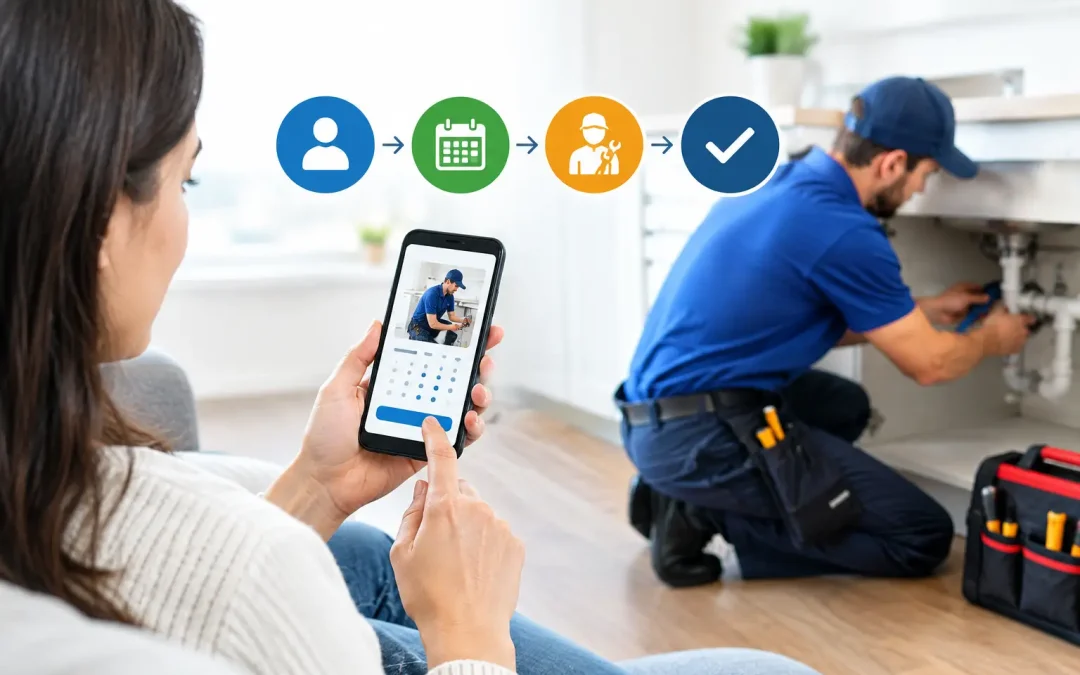
A homeowner with a burst pipe is not comparing brand colors or reading your company story. They are calling the first plumber who answers, sounds capable, and can give them a clear next step. That is why a plumber booking workflow is not an administrative detail. It is a revenue system that determines whether expensive leads become booked jobs or disappear into a competitor’s schedule.
Many plumbing companies invest in Google Local Services Ads, map visibility, SEO, or paid search, then let the handoff break down at the moment of truth. Calls roll to voicemail. Web forms sit for an hour. A dispatcher asks the wrong questions. The customer gets a vague promise that someone will call them back. Rankings may look good, but the business is still leaking revenue.
A better workflow connects marketing, lead response, qualification, scheduling, and follow-up into one operating system. Strategy before tactics applies here: before buying more leads, make sure your team can convert the demand you already create.
Where Plumbing Leads Get Lost
The most costly booking failures are usually ordinary, not dramatic. A technician is driving, the office is busy, and a caller reaches a generic voicemail. A form submission arrives after hours with no automated acknowledgment. A prospective customer calls about a water heater, but nobody establishes whether it is an active leak, a no-hot-water emergency, or a request for an estimate next week.
Those details change the right response. Emergency drain clearing requires speed and location verification. A planned repipe may require photos, property details, and an on-site assessment. Treating every inquiry the same creates two problems: urgent customers wait too long, while low-intent requests consume the attention your team needs for high-value work.
The goal is not to pressure every caller into an appointment. It is to quickly identify fit, urgency, geography, and service need, then give the qualified prospect a confident path to booking.
The Core Plumber Booking Workflow
A reliable workflow begins before the phone rings. It defines who owns each step, what information must be captured, how quickly the lead receives a response, and what happens if the first contact attempt fails. If any of those answers depend on someone remembering what to do, the process is fragile.
1. Capture the source and respond immediately
Every lead should enter one central system with its source attached. Whether it came from a Google Business Profile, Local Services Ads, organic search, a referral, Facebook, or a yard sign, source tracking helps you see which channels produce booked jobs rather than just inquiries.
For phone calls, the immediate objective is a live answer whenever practical. For missed calls, use an automated text acknowledgment within minutes, followed by a real callback. The text should set an expectation without pretending the job is already scheduled: confirm that the request was received, identify the company, and tell the customer when they can expect a response.
Website forms and chat requests need the same urgency. A form that produces a response tomorrow is not a lead-generation system. It is a delayed notification. During business hours, establish a response standard your office can consistently meet. After hours, automate the acknowledgment and define which requests trigger on-call escalation.
2. Qualify without turning the call into an interrogation
Your intake script should sound like a helpful conversation, not a call center checklist. The dispatcher or customer service representative needs enough information to route the job correctly and set expectations. At minimum, capture the caller’s name, phone number, service address, the problem they are experiencing, how urgent it is, and whether they own the property.
Then add questions that matter to your operation. Is water actively leaking? Is the main line backed up? Is the water heater gas or electric? Has another plumber already diagnosed the issue? Does the customer need service today, or are they researching a larger project? These answers help avoid sending the wrong technician, allocating an unrealistic time window, or booking work outside your ideal service area.
Be disciplined about service boundaries. If your crews do not handle septic systems, commercial high-rises, or distant zip codes, do not create false hope just to fill a calendar. The right workflow protects technician capacity for jobs your company can serve profitably and well.
3. Offer a specific appointment, not a vague promise
“We will have someone call you” is not a booking outcome. A real appointment has a date, a service window, a clear explanation of any diagnostic fee or dispatch policy, and a confirmation that the customer knows what happens next.
For emergency calls, the workflow may prioritize the closest qualified technician and provide an estimated arrival range. For non-emergency repairs, offer the nearest available windows and guide the customer toward a decision. For estimates involving repipes, remodels, sewer replacements, or water treatment equipment, schedule the right type of visit with the person who can evaluate and quote the work.
Price conversations require judgment. Quoting a complex repair blindly can create distrust and margin problems. But refusing to discuss fees at all can also lose legitimate customers. Your team should be able to explain your service-call policy plainly, distinguish diagnostics from repair pricing, and reinforce the value of a licensed professional arriving prepared to solve the problem.
4. Confirm, remind, and reduce no-shows
A booked appointment is still at risk until the technician arrives. Confirmation messages should repeat the appointment window, address, company contact information, and any preparation instructions. A reminder the day before or the morning of the appointment reduces forgotten visits and gives the office time to fill openings created by cancellations.
Two-way texting is especially useful for plumbing operations. Customers can send gate codes, photos of a leak, or updates about access. Your team can notify them when the technician is en route. The key is ownership: automated messages support the experience, but a person must monitor replies and act when a customer signals a problem.
Build Routing Rules Around Revenue and Response Time
Not all plumbing calls deserve the same route. A strong booking system uses rules based on urgency, job type, geography, and available capacity. Active leaks, sewage backups, and no-water situations may move to an emergency queue. Standard repairs may go to the next available service slot. Large-install or renovation opportunities may route to an estimator with a longer appointment window.
This is where fragmented marketing creates operational friction. If ads, call tracking, scheduling software, text messages, and the CRM do not communicate, the office becomes the integration layer. That means staff members copy information between systems, forget follow-ups, and struggle to explain what happened to a lead.
One unified growth plan connects those touchpoints. Near Me Website Marketing’s TradeFlow™ approach is built around this principle: visibility matters, but the operational handoff from lead to booked appointment matters just as much. The exact technology can vary by plumbing company. The non-negotiable is a documented process that prevents leads from getting lost between channels.
Measure Booked Jobs, Not Just Lead Volume
A marketing report that celebrates 100 leads tells you very little if 35 were unanswered, 20 were outside your service area, and only 15 became appointments. The numbers that matter are the ones that expose bottlenecks.
Track response time for calls, forms, and text inquiries. Track contact rate, booking rate, cancellation rate, show rate, close rate, average ticket, and revenue by source. Review missed-call volume separately. A missed call during a paid campaign is not merely an office issue – it is wasted marketing spend and a customer experience failure.
Break the data down by job category when possible. Your water-heater campaign may produce strong booked-job rates while drain-cleaning calls are being mishandled after hours. Or your Local Services Ads may drive plenty of calls but poor margins because the intake team is not screening location and job fit. The answer is not automatically to spend more or pause the channel. First, find the point where the workflow fails.
Train for Consistency, Then Audit the Real Experience
Scripts are useful, but only when they support good judgment. Train staff to sound calm with stressed homeowners, explain next steps clearly, and avoid promising what the field team cannot deliver. Role-play common calls: an overflowing toilet, a failed water heater, a slow leak behind a wall, a homeowner seeking a second opinion, and a property manager with multiple units.
Then audit actual calls and form follow-ups. Listen for long holds, confusing pricing language, missed opportunities to schedule, and weak closing language. Review whether the appointment details were entered correctly. A workflow is only real if it works on a busy Monday morning, not just in a training document.
Set standards that leadership reviews weekly. If response time slips, identify whether the issue is staffing, notification setup, call coverage, or unclear ownership. If booking rates drop, look at lead quality and the conversation before assuming the market changed.
Your next growth opportunity may not be another campaign. It may be the customer who is already trying to hire you, waiting for a clear answer and a confirmed time. Build the process that gives them both, and your marketing investment has a far better chance to turn into profitable work.