

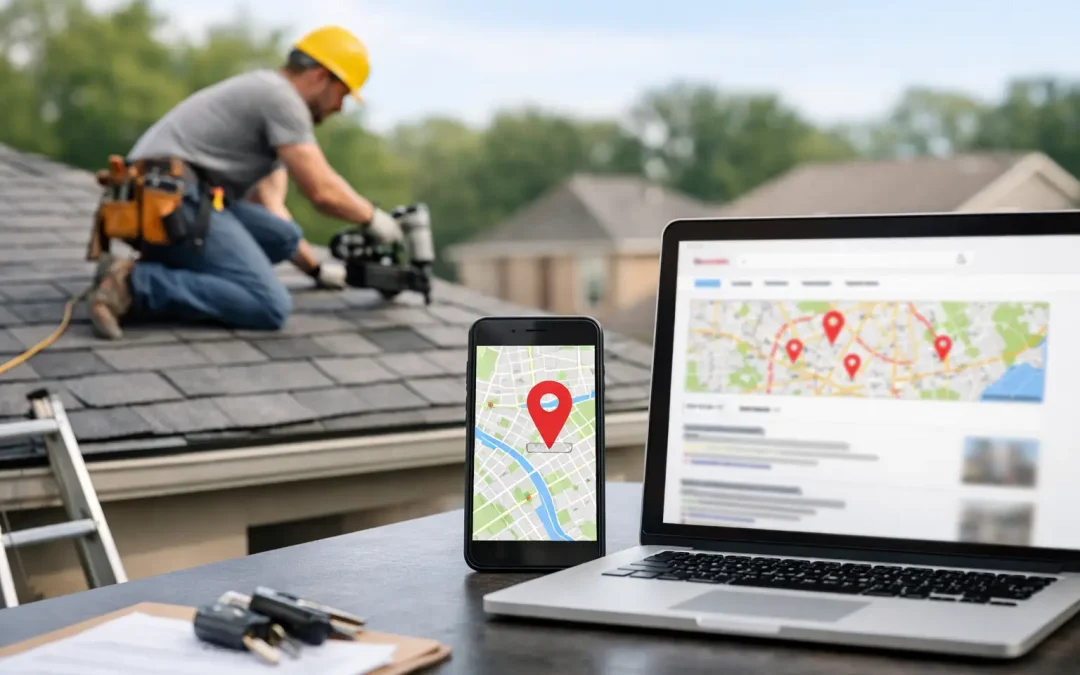
A homeowner notices a ceiling stain after a hard rain, searches “roof repair near me,” and calls the first company that looks credible, nearby, and available. That moment is where roofing local SEO services either produce a qualified opportunity or hand it to a competitor.
For roofing companies, local visibility is not a vanity metric. It is a lead-generation and market-positioning issue. Rankings matter only when they create calls, estimate requests, inspections, and signed jobs. A contractor can rank for a few keywords and still have a weak pipeline if the Google Business Profile is incomplete, the website does not build trust, or leads wait too long for a response.
The goal is not simply to “do SEO.” The goal is to build one unified growth plan that helps your roofing company show up when demand is high, convert that demand into appointments, and follow up until opportunities become revenue.
What Roofing Local SEO Services Should Actually Do
A roofing company needs to win visibility across the places homeowners use to make decisions: Google Maps, local organic results, service-area searches, AI-driven answer results, reviews, and branded searches after a referral. Each channel supports the others. A strong map listing with weak website pages leaves money on the table. Great website content without local authority may not reach the first page. Paid leads without fast response systems can become expensive missed calls.
Effective roofing local SEO services connect these pieces. They should clarify which services you want more of, which cities or neighborhoods are worth pursuing, and whether your team has the capacity to handle additional estimates. A company trying to build a larger commercial roofing division needs a different strategy than a residential roofer focused on storm damage, repairs, and replacements.
That strategy should then improve four business outcomes: local visibility, qualified lead volume, appointment conversion, and long-term market authority.
Start With the Google Business Profile
Your Google Business Profile is often the first sales page a homeowner sees. It must do more than display a phone number. It needs to communicate relevance, proof, service coverage, and professionalism before a prospect ever reaches your website.
That starts with accurate categories, services, business information, service areas, photos, review management, and ongoing activity. Roofing businesses should show real projects, crews, finished systems, inspections, and before-and-after work where appropriate. Stock photos and vague descriptions do not build the same level of confidence.
Reviews deserve special attention because they influence both visibility and conversion. A steady stream of detailed, authentic reviews tells a stronger story than a large number of old reviews with no recent activity. The best review process happens after a completed job, while the customer’s experience is fresh. It should be easy for the team to request feedback and easy for management to monitor it.
Do not confuse profile activity with a complete strategy, though. Posting occasionally or adding service keywords to a business description will not overcome a thin website, inconsistent business information, or stronger competitors with years of local authority.
Build Pages Around Real Roofing Demand
A roofing website should answer the questions homeowners ask before they contact anyone: Do you handle this problem? Do you serve my area? Can I trust your team? What happens next? How quickly can you inspect the damage?
That means creating useful, conversion-focused pages for core services such as roof repair, roof replacement, storm damage inspections, emergency roofing, metal roofing, and commercial roofing when those services are genuine priorities. Location pages can also support market expansion, but only when they provide value for that specific area. Copying the same page and changing the city name is a shortcut that rarely produces durable results.
The strongest pages combine local relevance with decision-making information. They explain the service, show evidence of experience, outline the process, address common objections, and give the prospect a clear next step. They also make calls and form submissions easy from a mobile device, where many urgent roofing searches happen.
This is where strategy before tactics matters. There is no value in pushing traffic toward pages that are slow, generic, or confusing. More visibility only magnifies the weaknesses already present in the customer journey.
Authority Is Earned Beyond Your Website
Google needs confidence that your roofing business is legitimate, established, and relevant in the markets you serve. That confidence comes from consistent local business information, credible mentions, quality citations, community visibility, trade relationships, and a healthy backlink profile.
Not every link has equal value. A random volume of low-quality links may create the appearance of activity, but it rarely strengthens a durable market position. Local authority is built through relevance and trust. A roofing company that is recognized by regional organizations, suppliers, local publications, or respected industry resources sends a stronger signal than one relying on automated directory submissions.
Authority building takes time because it reflects real-world reputation. That is a trade-off worth accepting. Fast, cheap tactics can create noise. A deliberate approach creates an asset that supports rankings, brand searches, and credibility long after a single campaign ends.
Local SEO Must Work With Lead Response
A roofing lead has a short shelf life. If a homeowner contacts three contractors and your office responds hours later, your map ranking did its job but your sales process did not. Many companies blame lead quality when the real issue is speed-to-lead, unclear handoffs, or inconsistent follow-up.
A complete growth system connects local SEO with call tracking, form routing, text response, appointment reminders, and a defined process for unresponsive leads. The objective is simple: make it easy for a prospect to schedule an inspection and difficult for a valuable inquiry to disappear.
This matters even more during storm events. Search demand can spike quickly, and the company with an organized intake process can capture more opportunities without overwhelming office staff. Automation should support your team, not replace the personal confidence a homeowner needs before allowing a contractor onto their property.
Near Me Website Marketing approaches this through a full customer-journey model, aligning visibility work with conversion-focused web design and TradeFlow™ lead automation. The point is not to produce a prettier monthly report. It is to remove the bottlenecks between a Google search and a booked roofing job.
How to Measure Whether the Strategy Is Working
Keyword rankings and map pack positions are useful diagnostic measures, but they are not the final score. Roofing owners should track the movement from visibility to revenue: calls, forms, qualified opportunities, inspections scheduled, estimates delivered, close rate, and revenue by source.
There will be variables. Seasonal demand, weather patterns, service mix, sales capacity, and competitor ad spend can affect results. A company in a dense metro area may need a longer authority-building runway than one in a smaller market. A new website may show early gains quickly, while a business with years of inaccurate listings and poor reviews may need foundational cleanup first.
That is why responsible partners set expectations instead of promising overnight domination. Local SEO compounds. Early work establishes accuracy, relevance, and conversion paths. Over time, content, authority, reviews, and engagement give Google more reason to place your business in front of local searchers.
When SEO Alone Is Not Enough
Organic local visibility is a core growth channel, but it does not have to carry the entire lead-generation burden. If your roofing company needs immediate demand for a high-value service area, Local Service Ads or paid search can add speed while SEO builds long-term authority. The trade-off is that paid media requires budget discipline, proper tracking, and strong follow-up to protect return on investment.
The best approach depends on your growth goals. If crews have open capacity next month, paid media may help fill the calendar. If your company is planning to own a market for the next five years, local SEO, review growth, and authority building deserve sustained investment. Most established roofing companies benefit from both, managed under one plan rather than in disconnected silos.
Your next opportunity is already searching somewhere nearby. Make sure the experience after that search reflects the quality of work your roofing company delivers on the roof.